
The Risk of DIY filler and treatment for complication Leave a comment
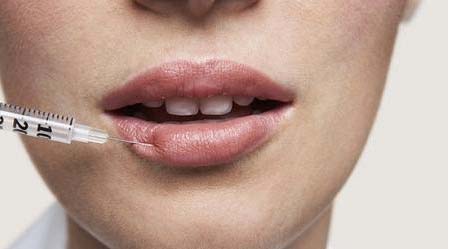
Lip filler or lip augmentation is a secret of many celebrities throughout the world. The trend of having a full lip is common in advertisements. It makes you believe that you need to have a full lip to look sexy.
Med spas and clinics are shut down due to lockdown worldwide since the Covid19 outbreak early in 2020, there is a trend of DIY filler happening now in social media. The harm and risk associated with DIY fillers can but severe. Since most of the Hyaluronic acid filler for Hyaluron Pen are cross-linked, so it should be admitted with a professional. In this article, you will learn the risk of DIY fillers at home, what could go wrong, and why you should not do it at home by yourself. We will also go over on how to treat the complication, and how you can find out early in case if complication happens.
Don’t assume that ten youtube videos are enough to learn facial structure. You can’t master the use of DIY fillers without clinical guidance. Doctors are there for injection because the experience matters more than you know. If you have no skill or experience, using even a DIY filler with hyaluron pen can cause you severe damage such as Vascular occlusion. Severe case may lead to skin necrosis, skin ulceration, eschar, organ defects, blindness, cerebrovascular accidents, etc., or even permanent effects on personal physiology. You will have to live with that experience for the rest of your life if it is not treated quickly.
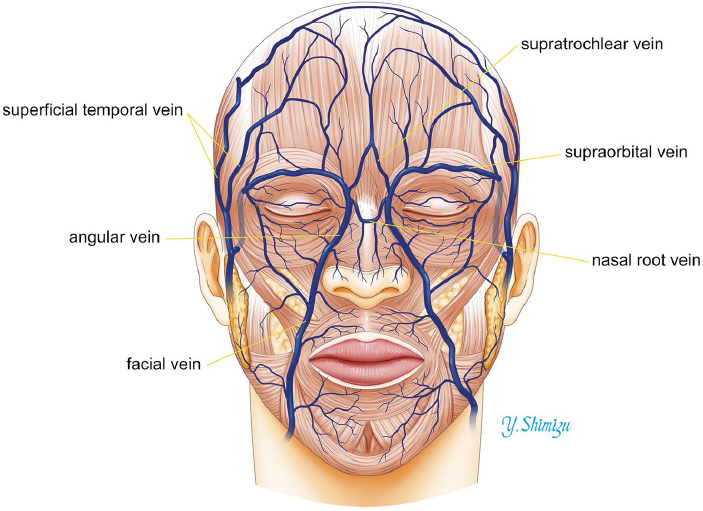
Vascular occlusion results from accidental injection of filler into an artery, or compression of the artery from surrounding filler. This is a serious complication of dermal filler injections that can rapidly lead to tissue necrosis if not identified and treated quickly. Such complication is hard to identify at the very beginning. Symptoms like venous thrombosis appear slowly, most people did not even notice, but they have caused serious consequences. If you need to get treated with the best result, you need to diagnose and treat as soon as possible. The earlier the treatment, the better the effect. It is particularly important to choose an experienced doctor for filler injection, to avoid the incidence of Vascular occlusion, and even if Vascular occlusion occurs, it can be treated and treated in a timely and effective manner.

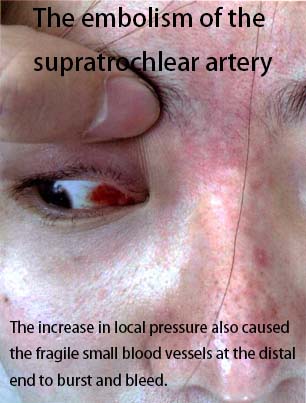
Vascular occlusion can be roughly divided into three grades: mild, moderate, and severe. In the same part of the picture below, you can fully understand the severity of Vascular occlusion.

Mild complication (easy to be confused with usual injection complications):
Slight swelling
- Variegated pigment changes on skin surface
- There may be small pus spots and ulcers, superficial abscesses on skin surface.
Moderate complication (at this time treatment is still not too late):
Moderate to severe swelling
- Variegated pigment changes on skin surface are more obvious, and the skin shows a trend of necrosis
- There are more pus spots, and the abscess is deeper
Severe complication (at this stage, treatment is often difficult to return to the desired result):
- Necrosis, ulceration, and eschars appear in a larger area of the skin
- Tissue and organ defects
- Blindness, cerebrovascular accident and other serious illnesses
The Causes of Vascular occlusion
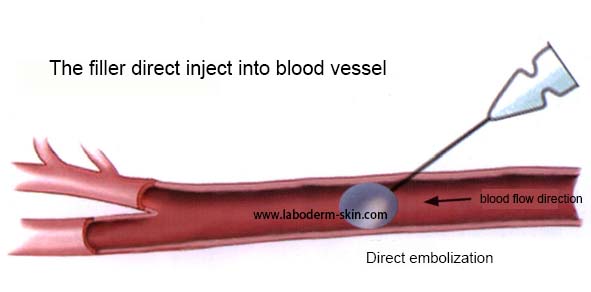
Direct embolization:
This happens during injection, the needle is directly pierced into the thicker blood vessel, and the embolus is directly injected into the blood vessel, causing physical embolism.
Because the blood vessels in the face are mostly thin, it is not common in reality.

Indirect embolization:
During the injection process, when the needle tip penetrates or is withdrawn, when it makes a wound on the blood vessel, causing the blood to flow out slowly. However, the doctor continued to inject fillers in the interstitial spaces outside the blood vessels, bleeding and injecting fillers increase the pressure between the tissues.
When the external pressure and the vasoconstriction pressure balance, but exceed the blood vessel diastolic pressure, the blood will flow back, and the mixture of blood and hyaluronic acid in the interstitial space will be pressed into the blood vessel again, thereby forming an embolism.
Most of the Vascular occlusion caused by filler injection is related to such reason. It is characterized by obvious bleeding and swelling, however it does not appear immediately after injection. Most of the symptoms appear after pressing and re-shaping to create desired shapes. Some rare cases even happen a few days after.
The difference between Vascular occlusion and normal redness/bruise:
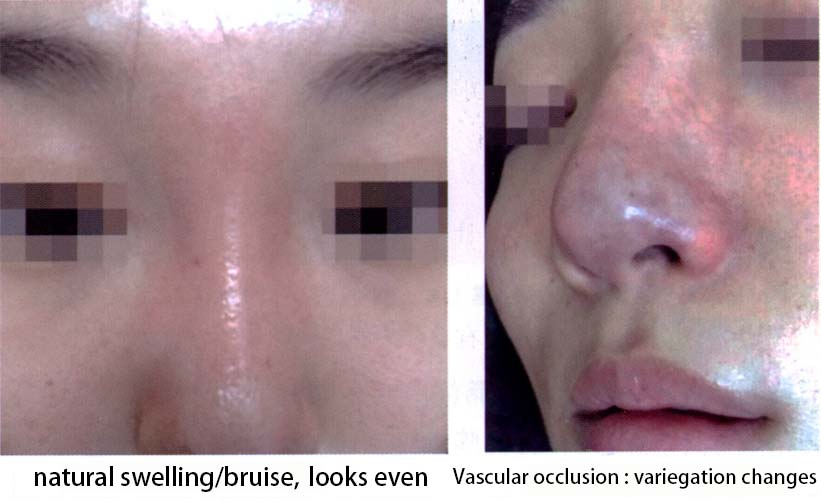
After the operation, the natural swelling/bruise had a more even pigmentation on skin. With the injection point as the center, the redness spreads evenly on both sides, and the color gradually fades. If you apply ice Immediately after injection, you can see that the symptoms are significantly reduced. It is usually the most obvious on the first day after the operation, and the swelling disappears quickly on the third day after the operation.
However, most Vascular occlusion show variegation changes. Even you apply ice after the injection, the swelling may be slightly reduced, but the variegation pigmentation changes are basically unchanged or even worse. Most of the patient will feel a lot of pain and discomfort in the injection area.
Early stage Vascular occlusion treatment:
Early stage embolism means that the embolism occurs within 3 to 72 hours, at which time the embolus migration has been basically shaped, and the embolization area is basically fixed. During this period, the focus of treatment was not only to limit the flow of emboli as much as possible, but to deal with the complications caused by ischemia that are gradually beginning to appear. Therefore, bloodletting and decompression is still the primary treatment. Injecting Hyaluronidase to melt the hyaluronic acid is also essential.
Late stage Vascular occlusion treatment:
Three to four days after the injection is a critical time period. Patients with severe embolism have already developed symptoms of skin necrosis at this time. Principles of treatment at this time could be the following:
- Debridement: Remove necrotic tissue, protect surrounding healthy tissue, and minimize necrosis as much as possible.
- Anti-infection: Apply iodophor or gentamicin solution on the surface, smear antibacterial peptides, apply antibiotics IV injection if it is necessary.
- Vascular expansion therapy: Treat with medication such as steroid or aspirin.
- Skin repair treatment: Apply EGF, PDRN or Stem Cells to treatment area, skin regeneration cream could be combine with the treatment as well.
- Dissolution: If necessary, re-inject Hyaluronidase at treatment area.
- Hyperbaric oxygen therapy: This is the type of treatment used to speed up healing of stubborn wounds, and infections in which tissues are starved for oxygen.
The next time you plan to buy fillers online to DIY filler at home, remember what it can cost you apart from money. There are many DIY skin care procedures which is safe to apply at home such as micro-needling. Or even use a skin stimulator like Tok stick to apply Salmon DNA for a DIY skin resurfacing. Salmon DNA is safe and effective in wound healing, cellular growth, tissue and skin regeneration, and inflammation reduction via activation of adenosine A2 receptors. There are easier and more safe cosmetic ampoules for DIY skin care at home. This is what you should do at home, leave the filler to the professional doctors.


