
Main differences between PN Polynucleotides and PDRN Polydeoxyribonucleotides Leave a comment
In the realm of advanced skincare and aesthetic treatments, polynucleotides (PN) and polydeoxyribonucleotides (PDRN) have emerged as two powerful bioactive compounds derived from salmon sperm DNA. These long-chain nucleic acids play a vital role in skin rejuvenation by promoting collagen production, enhancing skin elasticity, and improving overall dermal health. While both share regenerative properties, they serve distinct purposes based on their molecular structure and biological activity.
Polynucleotides (PN): Comprehensive Skin Regeneration
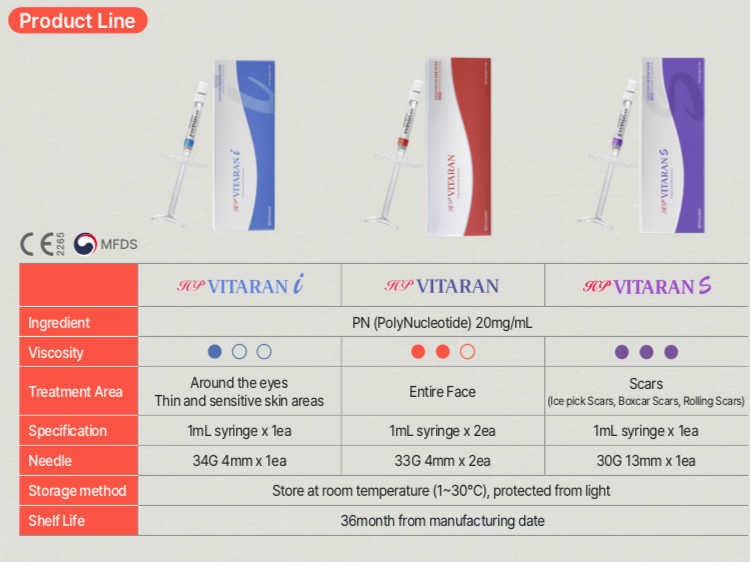
PN is a high molecular weight, long-chain biopolymer that provides prolonged support to the skin. Due to its extended chain length, PN remains active in the dermis for a longer period, offering sustained stimulation of collagen synthesis and long-term structural benefits. It effectively activates fibroblasts, leading to enhanced collagen production and improved skin texture. PN’s higher-order polymer structure also contributes to its potent anti-inflammatory action, helping to modulate immune responses and reduce skin inflammation. This makes PN particularly effective for comprehensive anti-aging treatments and full-face skin regeneration.
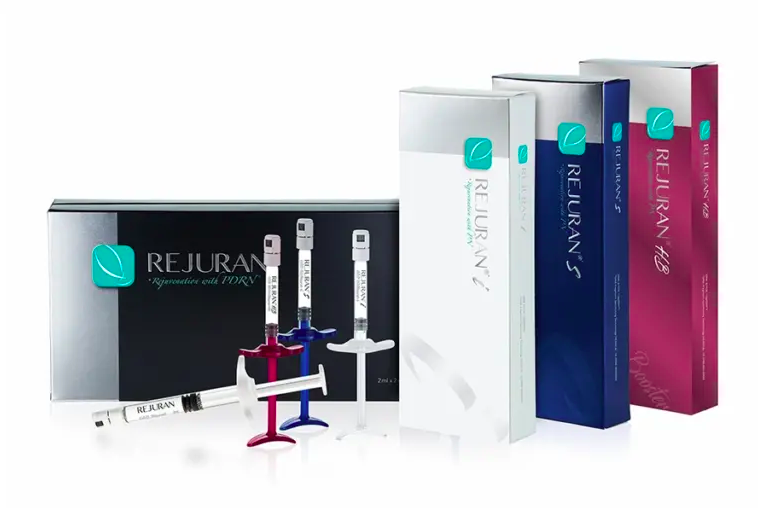
The only two KFDA approval product in South Korea is Rejuran and Vitaran. These two brands are the only PN products used widely in Korean clinic with both KFDA and CE approval. All other products are usually made for export, you will not see them in Korean clinic due to lack of KFDA approval. This might be the reason why these two brands are more expensive than those OEM brands made for export. Rejuran came with Rejuran 2% PN, Rejuran i for eyes, Rejuran S for scar, and Rejuran HB with hyaluronic acid and lidocaine to reduce pain. While Vitaran came in Vitaran i 2% PN for eyes, Vitaran 2% PN for face, Vitaran S 2% PN for scars and Vitaran Curegel 2% PN hair filler for hair loss treatment. However for Rejuran brand, only the Rejuran 2% PN came with 2% PN, Rejuran I, S and HB contains 1% PN while all series in Vitaran contains 2% PN. Rejuran also carry export cosmetic essence with lower percentages of PN such as trueskin essence and elaskin essence, these two products are cosmetic essence product which made for export, they are not the same as Rejuran PN, Rejuran PN which is a KFDA approval medical device, Rejuran trueskin essence and elaskin essence is cosmetic only with low PN. Rejuran and Vitaran are premium brands in South Korea and they are both used in Korean clinics. The cost to have a Rejuran or Vitaran treatment is about $250 USD for one 2ml syringe, sometimes the clinic offer holiday promotional sale, and you can have the treatment done in Korean clinic for about $200 USD. You can try both Rejuran or Vitaran in Korean chain clinic such as Tox & Fill, they have over 34 branches nationwide in South Korea.
Polydeoxyribonucleotides (PDRN): Targeted Skin Repair
PDRN, a shorter-chain derivative of DNA, is well-suited for targeted skin repair. It excels in healing damaged tissue, making it ideal for addressing specific concerns such as acne scars, fine lines, stretch marks, and post-procedure recovery. PDRN also supports hydration and elasticity, helping the skin appear smoother and more youthful. With excellent biocompatibility, PDRN integrates easily into human skin, minimizing the risk of adverse reactions. It offers mild anti-inflammatory effects by aiding tissue repair and reducing cellular inflammation, further contributing to accelerated healing.
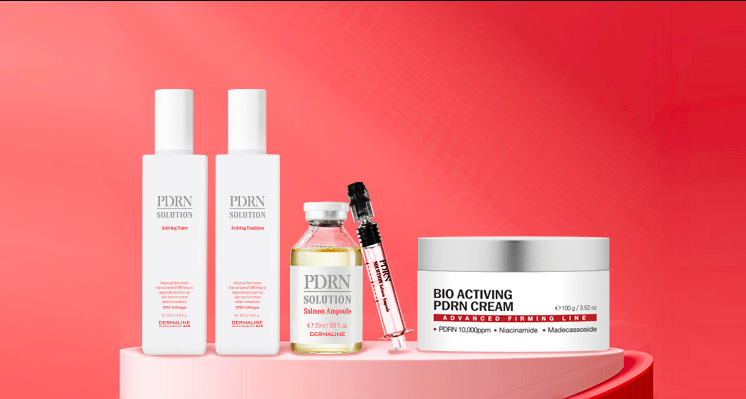
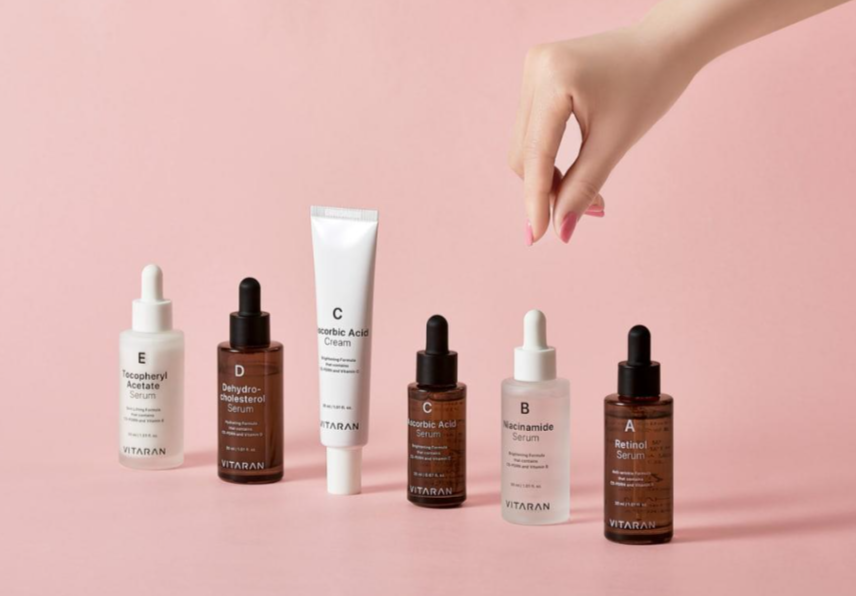
PDRN is widely recognized not only in the aesthetic medical field but also across the broader cosmetics industry. In addition to well-known brands like Rejuran and Vitaran, which feature Salmon DNA in their skincare lines, other companies such as Dermaline have also gained popularity for their PDRN-based products.
Key Differences and Cosmetic Applications
While both PN and PDRN are derived from the same source, their structural differences significantly influence their function:
- Molecular Structure: PN features a longer nucleotide chain with a higher molecular weight, offering more extensive interaction with fibroblasts for deeper, prolonged stimulation. In contrast, PDRN’s shorter chain allows for greater stability and better mimicry of human DNA, ensuring higher compatibility and durability. This is one of the reason why PN is only made for injectable medical device while PDRN can be used as cosmetic, since PDRN can be absorb to skin more easily even for topical use.
- Function and Use: PN is ideal for global skin rejuvenation and long-term support, whereas PDRN is more effective for focused repair and treating localized concerns like scars and fine lines. For example, Rejuran PN is used for anti-aging and skin rejuvenation while Rejuvenex forte is used for scars, wound healing, fine wrinkles and acne issues.
- Collagen Synthesis: PN offers more robust collagen stimulation by increasing fibroblast metabolic activity, while PDRN also promotes collagen formation, especially in damaged or compromised skin. For those with smooth skin and want to look younger, skin gets more firm and glow, PN will be a better choice than PDRN. For those with acne scars on face and want to stimulate collagen to heal faster, using micro needling with PDRN ampoules could help.
- Anti-Inflammatory Action: PN demonstrates a stronger regulatory effect on inflammatory cytokines, making it suitable for inflammatory skin conditions. PDRN supports wound healing with moderate anti-inflammatory effects.
- Function: Polynucleotides (PN) offer long-term structural support and promote comprehensive skin regeneration. In contrast, Polydeoxyribonucleotides (PDRN) are primarily utilized for addressing specific skin concerns, such as the repair of scars and the reduction of fine lines and wrinkles.
- Cosmetic Applications: PN is ideal for full-face skin rejuvenation, anti-aging treatments, and sustained dermal support. PDRN, on the other hand, is best suited for targeted treatments aimed at enhancing skin hydration, improving elasticity, and addressing localized issues such as scarring and wrinkle correction.
- Stability: PDRN’s shorter chain makes it more resistant to enzymatic degradation, ensuring better stability under physiological conditions. PN, though powerful, is more susceptible to breakdown due to its complex structure.


